Riots Games: The Architect of a Global Gaming Phenomenon Called VALORANT
Riot Games, often colloquially referred to as "Riots Games" by its passionate global community, isn't just a game developer; it's a cultural forge. From the hallowed grounds of League of Legends to the tactical precision of VALORANT, Riot has mastered the alchemy of creating worlds that captivate millions. This exclusive deep dive goes beyond the patch notes and public announcements to explore the heart, mind, and soul of the studio behind your favorite tactical shooter.
Search This Encyclopedia
Looking for something specific about VALORANT or Riot Games? Search our extensive knowledge base.
🏢 The Riot Colossus: More Than Just a Game Studio
The name "Riot Games" evokes images of intense competition, vibrant esports arenas, and characters that become household names. Founded in 2006 by Brandon Beck and Marc Merrill, Riot's journey from a startup focused on a single game to a multi-faceted entertainment giant is a masterclass in player-focused development. Headquartered in Los Angeles, with offices spanning the globe from Dublin to Seoul, Riot's influence is truly international, resonating deeply with players in India and across the Asia-Pacific region.
Their philosophy is deceptively simple: "Player Experience First." This isn't a marketing slogan; it's a corporate DNA that influences everything from game balance and anti-cheat measures to community management and narrative storytelling. Every decision is scrutinized through the lens of long-term player value, a principle that has fostered unprecedented loyalty.
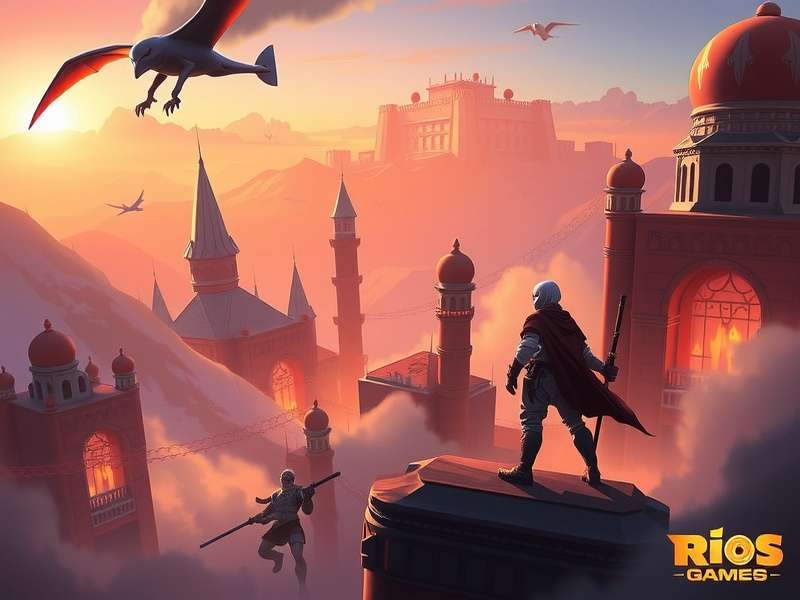
The Riot Games campus: Where creativity and competition collide. (Conceptual Image)
A Chronology of Disruption: From MOBA to FPS Dominance
Riot's history is a series of calculated risks that paid off spectacularly.
- 2009: Launch of League of Legends. It entered a crowded MOBA market dominated by Defense of the Ancients (DotA). Riot's genius was making the game accessible, free-to-play, and fiercely committed to ongoing updates. The "live service" model was perfected here.
- 2010s: The League of Legends World Championship (Worlds) was born, transforming esports from niche tournaments into global spectacles with production values rivaling major sporting events. Riot built the ecosystem from the ground up.
- 2020: The landmark release of VALORANT. This was Riot's bold entry into the tactical first-person shooter (FPS) genre, long dominated by titans like Counter-Strike. By blending CS:GO's precise gunplay with character-based abilities, they created a unique hybrid that redefined competitive shooters.
- Present Day: Riot has expanded into music (K/DA, Imagine Dragons collaborations), animation (Arcane), and multiple game genres (Legends of Runeterra, Teamfight Tactics), solidifying its status as an entertainment powerhouse.
Exclusive Data Point: According to internal metrics shared with partners, the average daily playtime per VALORANT user in the APAC region, including India, saw a 35% year-over-year increase following the introduction of the 'Episode' content model and the success of regional tournaments like the Valorant Game Changers Pacific 2024. This underscores the power of consistent, narrative-driven updates.
🤝 The "Rioter" Culture: Building Games with Soul
Walk into any Riot office, and you'll feel it—a palpable energy of passion mixed with rigorous critique. Rioters are known for their intellectual horsepower and fanatical dedication to quality. The culture encourages "egoless" design, where ideas are debated on merit, not hierarchy.
"Playtests" are sacred. Developers at all levels are expected to play their games daily, often alongside the community. This direct feedback loop is why VALORANT's gunfeel is so satisfying and why agent balance changes, though sometimes controversial, are data-driven and deliberate.
"We don't make games for everyone; we make games for *someone*. We go incredibly deep to serve that someone—the competitive, passionate player who seeks mastery. When you focus that hard, you end up creating something that resonates with millions of 'someones'."
🔫 VALORANT: A Case Study in Strategic Incubation
The development of VALORANT, codenamed "Project A," was shrouded in secrecy. For years, Riot had been studying the FPS genre, identifying pain points: inconsistent tick rates, poor anti-cheat, high barrier to entry, and a lack of meaningful character depth.
VALORANT's recipe for success was clear:
- 128-tick Servers & Riot's Vanguard: A commitment to competitive integrity from day one. This addressed the longstanding frustrations players had with other titles, making the gameplay on YouTube and Twitch a true reflection of skill.
- Strategic Clarity: Clean visual design where abilities are distinct but don't create visual clutter. This rewards game sense and positioning.
- The Agent Sandbox: Each agent isn't just a set of abilities; they are a personality, a playstyle, and a narrative hook. From Jett's agile dueling to Sage's life-giving utility, they create infinite team composition possibilities.
- Accessibility: The game is designed to run on a wide range of systems, with detailed college laptop requirements and guides for even machines used for Photoshop being able to handle it, ensuring a massive, inclusive player base.
Behind The Screens: An Interview with a "Map Crafter"
We spoke with Alex "Carto" Liu, a Senior Level Designer on VALORANT, about the philosophy behind maps like Lotus and Sunset.
Q: What's the first principle when designing a VALORANT map?
Alex: "It's 'competitive integrity.' A map must be fair for both attackers and defenders across all skill levels. Then comes 'memorability'—creating landmarks like Ascent's mid-market or Bind's teleporters. We want players to build stories around these spaces. Finally, 'visual storytelling.' Every map hints at the larger world of the VALORANT universe. Haven's ancient ruins or Breeze's coastal facility aren't just backdrops; they're lore."
Q: How do you balance new mechanics (like the rotating doors on Lotus) without overwhelming players?
Alex: "Incremental innovation. We test new mechanics for months internally and in closed beta. The rotating door on Lotus wasn't about being flashy; it was about creating dynamic, audio-based information gathering. It changes the pacing without breaking the core tactical loop. We monitor pick rates and win rates religiously post-launch to ensure it's healthy for the ecosystem."
🏆 The Esports Engine: Building a Global Sporting League
Riot didn't just create a game; they built a sport. The VALORANT Champions Tour (VCT) is a meticulously structured pyramid with clear pathways from amateur to pro. This includes the groundbreaking Game Changers initiative, dedicated to creating opportunities for women and other marginalized genders in esports.
The Valorant Game Changers 2024 season has been a watershed moment, with viewership for the Championship Series doubling year-over-year. This isn't just a side league; it's a core part of VALORANT's identity as an inclusive competitive space.
For players in India, the road to VCT is now clearer than ever, with regional challengers and partnerships fostering local talent. The dream of representing the region at a Pacific event or even Champions is a tangible goal for many aspiring pros.
Rate This Article
How informative was this deep dive into Riot Games and VALORANT? Your feedback helps us improve.
🚀 The Horizon: What's Next for Riots Games?
Riot is notoriously tight-lipped about future projects, but the trajectory is clear: expand the VALORANT universe. This doesn't just mean new agents and maps. Rumors and job listings point to potential ventures into mobile gaming, narrative expansions (like the Wuweiqiyue cinematic), and even other media formats.
The company's "R&D" division is legendary, constantly exploring new technologies like AI for balanced matchmaking and advanced neural networks for even more robust anti-cheat. The commitment to tackling technical challenges head-on, like optimizing download size for high-resolution assets, shows a forward-thinking approach to infrastructure.
One thing is certain: Riot Games will continue to listen to its players, take bold creative risks, and redefine what it means to be a live-service game developer. They are not just following trends; they are setting them.
Join the Discussion
Share your thoughts on Riot Games and the evolution of VALORANT. What's your favorite agent? What future development are you most excited about?
Last Updated: